Firth analysis is a tool for the critic and the producer of advertisements; it helps both parties examine an ad for meaning and cultural significance.
Using the Firth method, you examine an ad in terms of three levels of meaning: The surface meaning; the advertiser's intended meaning; and the cultural/ideological meaning.
A Firth analysis goes something like this:

(This image is public domain as specified under US copyright law. For more information/ a link to the source of the image, click HERE.)
1. Surface meaning:
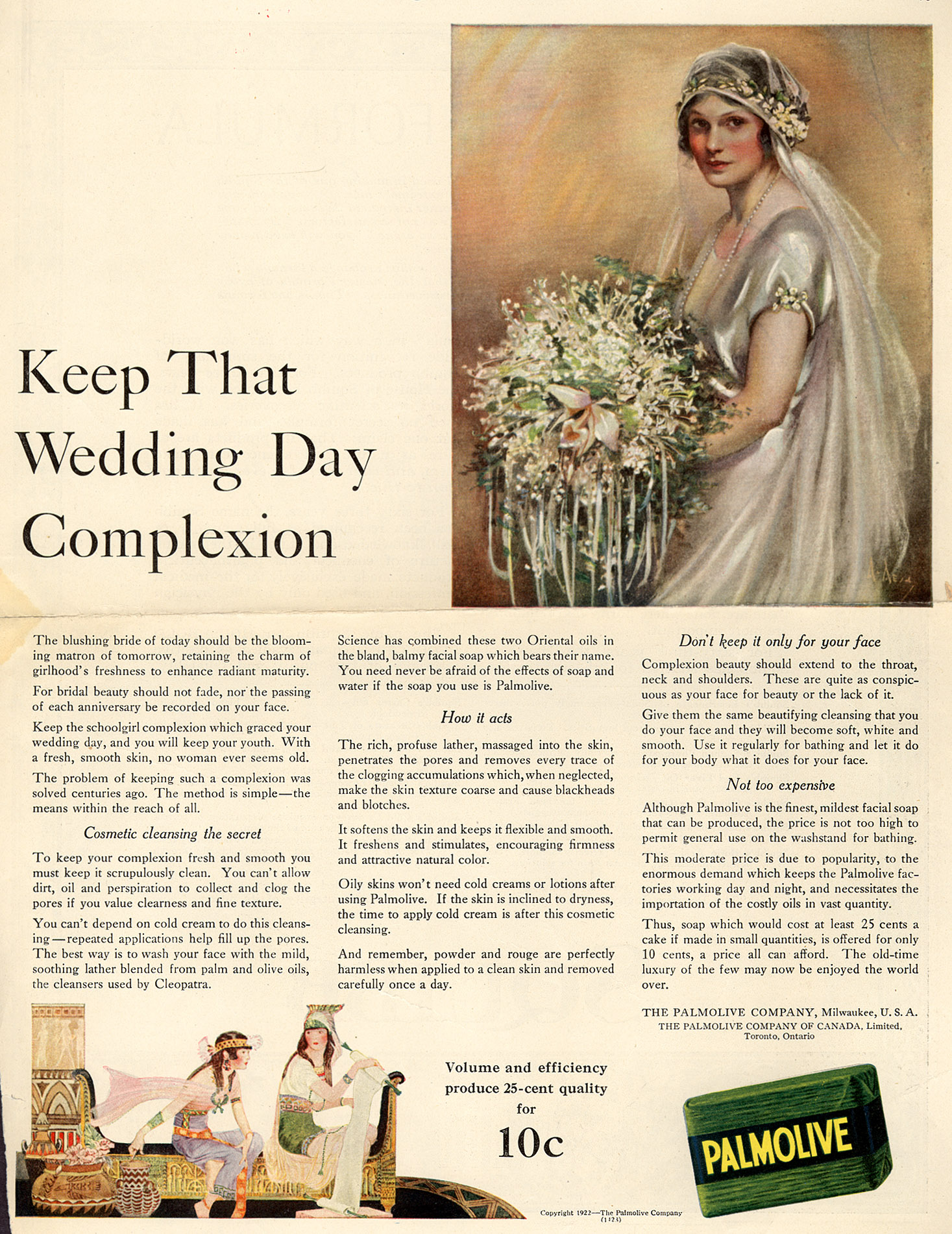
On this level we notice that there is a woman in the upper right hand corner in a wedding dress. To her left is text saying "keep that wedding day complexion".In the lower right we see the a bar of Palmolive soap in green packaging with yellow letters on top of a black background.
In the left corner is a representation of Egyptian women who seem to be working with cloth while sitting on a couch.
2. Advertisers intended meaning:
The advertiser is trying to tie the product to good feelings about weddings, and the idea that their product will enable women to look as beautiful every day day as did that day.
The images in the ad are meant to convey that this soap works very well at cleaning, and will enhance the users appearance.
The text in the ad is meant to encourage the reader to buy the product, noting its affordability, effectiveness, and that it is good for everyday use.
3. Cultural/ideological meaning:
Using the wedding motif, this ad promotes the idea of marriage; and the idea that women should be beautiful.
The bulk of the text gives information about the product, how to use it and how it works. It is promoted as an everyday beauty product - suggesting that women ought to have an everyday beauty routine.
The ad also advertises "Cosmic cleansing" as its secret to working so well. There is an appeal to mysticism in this, and the fact that they depict what looks like Egyptian women in the ad. It is notable that the Egyptian women are sitting - not standing; suggesting that perhaps this is a model that should be followed.



No comments:
Post a Comment